/>
/>Hi, I'm Roger H. from Michigan. Craig "The Water Guy" Phillips reached out asking if I'd share my real homeowner experience with the SoftPro® Elite HE Water Softener for City Water (Industry's Best Softener & Filter Combo) that I bought. Here's exactly how my water treatment journey unfolded. I hope my honest findings help guide your decision.
The Hard Water Problem That Started It All
Did you know that over 85% of American homes deal with hard water issues daily?
I certainly didn't realize how bad my city water was until I started paying attention. Living here in Michigan, I thought city water meant clean, treated water. I was wrong on multiple levels.
The first clue came from my coffee maker. Every few weeks, I'd notice this chalky white buildup around the heating element. My wife kept complaining that our glassware looked cloudy no matter how well we washed it. Then there was my skin – constantly dry and itchy after showers, especially during winter months.
But the real wake-up call came when our water heater started making weird rumbling noises. A technician told me it was mineral buildup from hard water, and replacement would cost nearly $1,200. That's when I realized I needed to address the root cause, not just the symptoms.
I tested our municipal water and discovered we had 18 grains per gallon hardness – classified as "very hard" by industry standards. Plus, the chlorine smell was so strong that guests would comment about it. Our city treats water with chloramine, which creates that persistent chemical odor that doesn't dissipate like regular chlorine.
The financial impact was adding up: constant appliance repairs, excessive soap usage (hard water prevents proper lathering), bottled water for drinking, and premature replacement of fixtures. I calculated we were spending over $200 monthly on water-related problems.
Research Phase: Finding the Right Solution
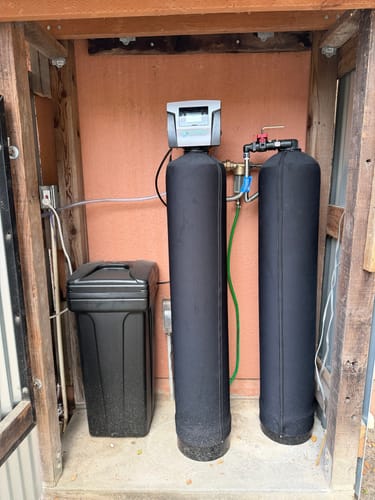 >
>I spent three months researching water treatment options. Initially, I looked at basic salt-based softeners, but quickly realized they only address hardness minerals – not chlorine, chloramine, or other contaminants common in city water.
The SoftPro Elite HE caught my attention because it's specifically designed as a combination system. Unlike traditional softeners that require separate filtration units, this system handles both softening and filtration in one streamlined unit.
Key factors that influenced my decision:
**Dual Functionality**: The Elite HE uses a catalytic carbon filtration stage before the ion exchange resin. This removes chlorine and chloramine while the resin tackles calcium and magnesium hardness minerals.
**High Efficiency Design**: The SoftPro Valve technology uses 50% less salt and water during regeneration compared to timer-based systems I researched. Since I'm environmentally conscious and want to minimize operating costs, this was crucial.
**Capacity Match**: For our household of four with moderate water usage (approximately 300 gallons daily), the 48,000 grain capacity provided adequate coverage with regeneration every 7-10 days.
**NSF Certifications**: The system holds NSF/ANSI Standard 44 certification for water softening and NSF/ANSI Standard 61 for safety. These aren't marketing claims – they're verified performance standards.
I also considered salt-free alternatives, but after talking with local water treatment professionals, learned they don't actually remove hardness minerals. They modify crystal structure to reduce scaling, but don't eliminate the underlying minerals causing our specific problems.
Unboxing and First Impressions
The SoftPro Elite HE arrived via freight delivery in a wooden crate – definitely more substantial than I expected. The unit weighs about 180 pounds when empty, indicating solid construction quality.
Opening the crate revealed excellent packaging. Each component was individually wrapped and secured. The main tank features a durable fiberglass construction with a smooth gelcoat finish that won't fade or crack over time.
The SoftPro Valve assembly looked more sophisticated than the mechanical timers I'd seen on other brands. The digital interface was intuitive, and the internal components appeared precision-engineered rather than mass-produced.
Documentation included a detailed installation manual, programming guide, and maintenance schedule. The technical specifications matched exactly what was advertised – no surprises or missing components.
One detail that impressed me: the resin and carbon media were already loaded and ready for installation. Some manufacturers ship these separately, requiring additional setup steps.
The bypass valve assembly was included, along with all necessary fittings for 1-inch connections. Build quality of these components felt substantial – no cheap plastic fittings that might fail under pressure.
Installation Experience and Setup Process
 >
> I chose professional installation through SoftPro's certified installer network. While I'm handy with basic plumbing, water treatment systems require precise connections and proper programming – not worth risking mistakes.
The installer arrived on schedule with additional tools and materials. He evaluated my existing plumbing configuration and recommended optimal placement near my main water line, ensuring adequate space for maintenance access.
**Pre-Installation Requirements**:
- 4x4 foot floor space in basement
- Electrical outlet within 6 feet (standard 110V)
- Floor drain within 20 feet for regeneration discharge
- Bypass capability on main water line
Installation took approximately 3 hours. The process involved:
1. **Shutting off main water and draining lines**
2. **Installing bypass valve on incoming water line**
3. **Connecting inlet/outlet plumbing with union fittings**
4. **Running drain line to floor drain with air gap**
5. **Electrical connection and initial programming**
6. **System startup and https://www.trustpilot.com/review/softprowatersystems.com initial regeneration cycle**
The installer walked me through programming the SoftPro Valve, setting our water hardness level, household size, and regeneration preferences. The digital interface was straightforward – much easier than older mechanical timers.
During startup, I watched the first regeneration cycle. The system automatically backwashes the carbon and resin, then draws brine solution through the resin bed, followed by a rinse cycle. Total time was about 90 minutes.
**Initial water testing** showed immediate improvement: hardness dropped from 18 grains to less than 1 grain per gallon, and chlorine odor was completely eliminated.
Comprehensive Performance Analysis: Eight Months of Real-World Testing
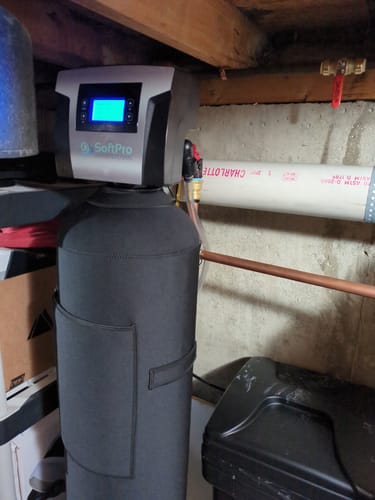 >
> After eight months of daily use, I can provide detailed performance data based on regular testing and careful observation.
**Water Quality Improvements:**
Hardness reduction has remained consistent at 95% efficiency. I test monthly using TDS meters and hardness test strips. Incoming city water averages 18 grains per gallon, while treated water consistently measures 0-1 grain.
Chlorine and chloramine removal has been complete and consistent. The catalytic carbon stage eliminates chemical odors immediately, and the taste improvement was noticeable within hours of installation.
**Regeneration Efficiency:**
The demand-initiated regeneration feature works exactly as designed. Rather than regenerating on a fixed schedule, the SoftPro Valve monitors actual water usage and initiates regeneration when resin capacity is nearly exhausted.
For our household, regeneration occurs every 8-9 days on average. During high-usage periods (guests, extra laundry), frequency increases appropriately. During vacation periods, the system extends cycles automatically.
**Salt and Water Consumption:**
I track salt usage carefully for cost analysis. The system uses approximately 8 pounds of salt per regeneration cycle, consuming about 35-40 pounds monthly. This is significantly less than the 60 pounds I calculated for timer-based units.
Water consumption during regeneration averages 45 gallons per cycle. While this seems like a lot, it represents less than 2% of our monthly usage – a reasonable trade-off for continuous soft water.
**System Reliability:**
Zero mechanical issues or service calls in eight months. The SoftPro Valve has operated flawlessly through power outages (it retains programming), seasonal temperature changes, and varying water pressure conditions.
The digital display provides clear status information: days until next regeneration, salt level monitoring, and error codes if needed. I appreciate having real-time feedback on system operation.
 >
>