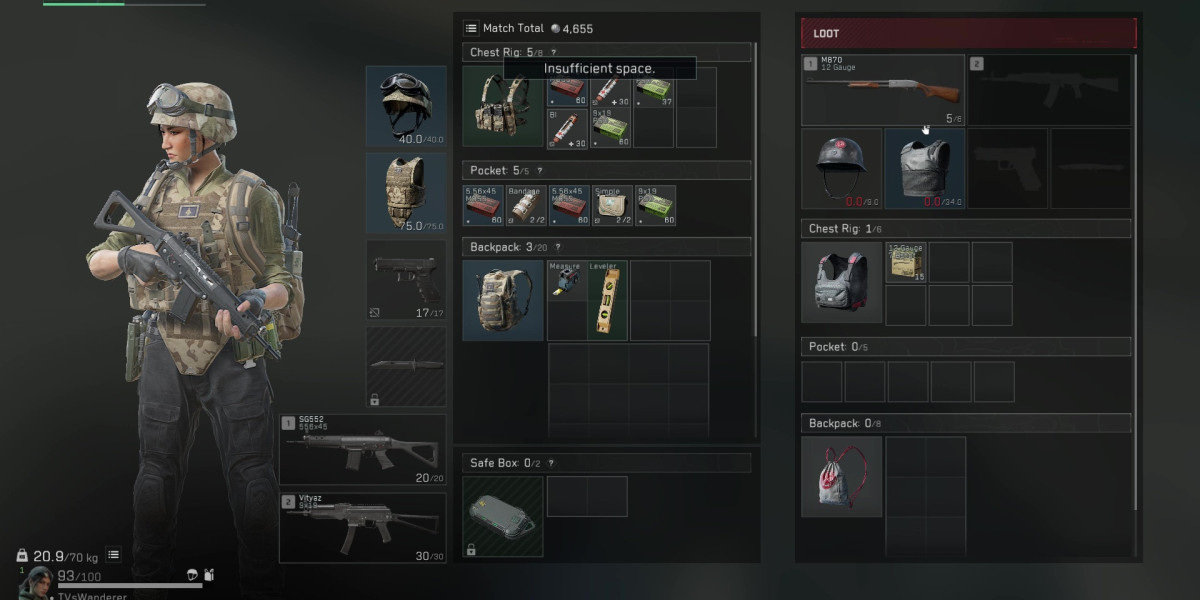

Most raids are decided before the first shot is fired. It comes down to what you packed, what you left in storage, and whether you know when enough is enough. Delta Force Items are not all worth carrying for the same reason. Some keep you alive for another minute. Others are there because they sell well, help with a task, or give your stash a bit of breathing room later on. You will quickly notice that a full backpack is not always a profitable one. Big items can look tempting, yet they may block space for smaller finds with better returns. Before queueing up, take a minute to sort your supplies. Keep your regular combat kit separate from trade goods and task materials. It sounds basic, but it stops that familiar panic when you find something valuable and realise there is nowhere to put it.
Pack for the job, not for luck
Players often bring their best gear into every run because they want to feel prepared. Fair enough, but it can turn a simple mission into an expensive loss. If you are heading in to finish an objective, build around that objective. Take the ammo, healing supplies, and tools you actually expect to use. Leave the fancy extras behind unless the route calls for them. A farming run needs a different mindset. Pick a section of the map you know well, including the exits, common patrol paths, and the spots where other squads tend to linger. Start with a route that is easy to repeat. You do not need the rarest room on the map every time. A steady run through reliable containers can bring in more over an evening than one reckless trip into a crowded hotspot. And if things feel off early on, it is fine to turn around. There is no prize for forcing a bad raid.
Think in space as well as price
Backpack management gets more important the longer you stay in a raid. Look at an item and ask two questions: what is it worth, and how much room is it taking? That habit saves a lot of wasted space. If a bulky item is only slightly better than three small pieces of loot, the smaller finds usually make more sense. Keep checking your bag as you move rather than waiting until it is packed solid. That gives you time to swap low-value clutter for something better. Resource planning matters outside the raid too. If you are short on materials for upgrades, picking up cheap Delta Force Tekniq Alloy can help fill a gap without turning every match into a desperate search. Still, do not buy or carry resources without a purpose. Know what upgrade or build you are working towards, then focus on the materials that move that plan forward. Random stockpiling feels productive until storage becomes a mess.
Leave while the run is still good
The hardest call is often knowing when to extract. You find one high-value item, then tell yourself you will check just one more crate. Everyone has done it. Sometimes it works out. Plenty of times, it does not. Once you have enough loot to make the raid worthwhile, your priorities should change. Move with more care, skip fights that do not help you, and listen for movement before crossing open ground. Your route out deserves as much thought as your route in. Learn at least two extraction options for each area, because the nearest exit is not always the safest one. After a few runs, make notes in your head about where you lost time, where you found useful loot, and what you never touched. That is how a farming routine starts to feel natural. You are not chasing every shiny item. You are building a repeatable method that lets your storage grow without risking everything each time.

জনপ্রিয় পোস্ট
-
 Tower Rush vs Real-Time Strategy: What's the Difference?
দ্বারা htyrose2293356
Tower Rush vs Real-Time Strategy: What's the Difference?
দ্বারা htyrose2293356 -
SoftPro Elite Water Softener Review Real User Experience 1
দ্বারা jamika97i8706
-
Betrouwbaar en Snel Betalen bij Spicy Casino in 2026
দ্বারা ariannewilmer4
-
Advanced Tactics for Veteran Tower Rush Players
দ্বারা kristangotch0
-
 U4GM Learn GAG 2 Items: Props, Rates, and Uses
দ্বারা CrystalVibe CrystalVibe
U4GM Learn GAG 2 Items: Props, Rates, and Uses
দ্বারা CrystalVibe CrystalVibe