/>
/>Hi, I'm Stacy G. I live in Georgia. Craig "The Water Guy" Phillips asked me to share my real homeowner experience with city tap water and the SoftPro® Elite HE Water Softener for City Water (Industry's Best Softener & Filter Combo) that I purchased. Here's exactly how my whole journey unfolded, and I genuinely hope this helps guide your decision-making process.
The Water Problems That Finally Made Me Take Action
Living in Georgia, I thought our city water was pretty decent compared to what I'd heard about other places. Boy, was I wrong about that assumption.
The first thing that really got my attention was the white, crusty buildup around every single faucet in my house. I'm talking about thick, chalky deposits that made my beautiful brushed nickel fixtures look absolutely terrible. No matter how much I scrubbed with every cleaning product imaginable, the buildup would return within just a few days.
But the real wake-up call came when my water heater started making these weird rumbling noises. The repair technician who came out took one look inside and told me I had serious mineral buildup reducing efficiency. He said I was probably spending 20-30% more on my energy bills because of hard water scale coating the heating elements.
Have you ever noticed how your skin feels tight and itchy after every shower?
I thought that was just normal until I stayed at a hotel with soft water and felt the difference immediately.
My hair was another story entirely. Despite using expensive shampoos and conditioners, it always felt dry and looked dull. I was spending a fortune on hair products trying to combat what I now know was hard water damage.
The laundry situation was equally frustrating. My white clothes were turning gray, and everything felt stiff and scratchy even with fabric softener. I was going through detergent like crazy because nothing seemed to get really clean.
When I finally tested my water, the results shocked me. We had 18 grains per gallon of hardness - that's considered very hard water. The city treats the water for safety, but they don't remove the minerals that cause all these household problems.
Research Journey and Why I Chose SoftPro
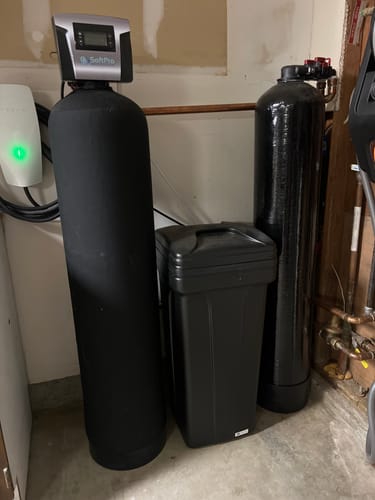 >
>I'll be honest - I knew absolutely nothing about water softeners when I started this research. I spent weeks reading articles, watching YouTube videos, and trying to understand the difference between salt-based and salt-free systems.
The first thing I learned was that true water softening requires ion exchange, which means a salt-based system. Salt-free systems are really conditioners that change how minerals behave, but they don't actually remove them from the water.
Since my main problems were caused by mineral buildup, I knew I needed actual hardness removal, not just conditioning.
I looked at several different brands, but the SoftPro Elite HE kept coming up in my research for a few specific reasons:
First, the high-efficiency design caught my attention. Traditional softeners can waste a lot of salt and water during regeneration, but this system uses advanced algorithms to minimize consumption while maintaining performance.
Second, the combo approach made sense for my situation. Instead of buying separate systems for softening and filtration, the Elite HE includes carbon filtration to handle chlorine taste and odor issues I'd also noticed in our city water.
The capacity was another important factor. At 48,000 grains, it's designed to handle a family of 4-6 people with very hard water, which matched my household perfectly.
What really sealed the deal for me was the SoftPro Valve technology?
Unlike some competitors that use third-party components, SoftPro designs and manufactures their own valve systems for better integration and reliability.
The warranty coverage was also impressive - 10 years on the tank and electronics, which gave me confidence in the long-term investment.
Installation Experience and First Impressions
When the system arrived, I was surprised by how professionally everything was packaged. The main tank is substantial - definitely not something you want to move around by yourself. At about 200 pounds when filled, proper placement planning is essential.
I decided to hire a local plumber for installation, even though the system comes with detailed DIY instructions. The installation took about 4 hours total, including setting up the bypass valve, drain connection, and electrical hookup.
The plumber mentioned that the SoftPro Valve was one of the easier systems he'd worked with because everything was clearly labeled and the fittings were high quality. No struggling with cheap plastic components or confusing wiring diagrams.
One thing I appreciated was the compact footprint. Even in my relatively small utility room, the system fit comfortably with room for salt storage and easy access for maintenance.
The first startup was straightforward. The digital display walks you through the initial programming, which includes setting your water hardness level, household size, and regeneration preferences.
Did you know that proper initial setup can significantly impact long-term efficiency?
I spent extra time getting the settings exactly right based on my water test results.
Within 24 hours, I started noticing subtle differences in water feel, but the real changes became obvious over the following week as the system fully conditioned all the water in my plumbing.
Performance Testing and Measurable Results
 >
> I'm definitely a numbers person, so I tracked several metrics to verify the system's performance objectively.
Before installation, I tested multiple times to establish baseline measurements:
- Hardness: 18 grains per gallon
- Chlorine: 2.1 ppm
- TDS (Total Dissolved Solids): 340 ppm
- pH: 7.8
After two weeks of operation, the post-softener results were impressive:
- Hardness: Less than 1 grain per gallon
- Chlorine: 0.1 ppm
- TDS: 298 ppm (expected reduction due to mineral removal)
- pH: 7.6
The system consistently delivers these results month after month. I test quarterly now, and the performance hasn't degraded at all.
One measurement I track carefully is salt efficiency. The Elite HE uses approximately 6.5 pounds of salt per regeneration cycle, and with our water hardness and usage patterns, it regenerates every 8-9 days. That works out to about 2.5 bags of salt per month for our household of four.
Water usage during regeneration was another pleasant surprise - only about 35 gallons per cycle compared to 50-80 gallons I'd read about with some other systems?
That adds up to real savings on the water bill.
I also measured water pressure throughout the house before and after installation. There's virtually no pressure drop - maybe 1-2 PSI difference, which is completely unnoticeable during normal use.
The regeneration process happens automatically around 2 AM, and it's remarkably quiet. I can't hear it running from my bedroom, which is directly above the utility room.
Daily Life Improvements and Unexpected Benefits
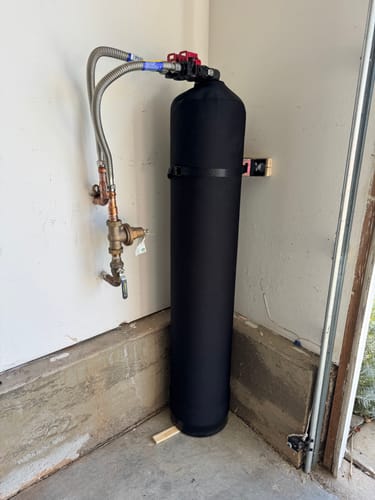 >
> The transformation in daily life was more dramatic than I expected, and some benefits caught me completely by surprise.
Showering became an entirely different experience within the first week. My skin went from feeling tight and dry to soft and moisturized. I actually reduced my lotion usage by about half because my skin retains moisture much better now.
My hair changes were even more noticeable. Colors stay vibrant longer, styling products work more effectively, https://www.trustpilot.com/review/softprowatersystems.com and I can go an extra day between washes because my hair doesn't get oily as quickly. My hairstylist commented on the improvement before I even mentioned the water softener.
Laundry results exceeded my expectations completely. Whites are actually white again, colors look more vibrant, and everything feels softer without fabric softener. I've reduced detergent usage by about 30% while getting better cleaning results.
Here's something I never anticipated - my coffee tastes significantly better?
The chlorine removal and softened water really enhance the flavor profile.
Cleaning the house became noticeably easier. Soap scum virtually disappeared from shower doors, and the white deposits around faucets are completely gone. Dishes come out of the dishwasher spot-free without rinse aid.
My plants seem happier too. The chlorine removal means I can water them directly from the tap without letting water sit out overnight to dechlorinate.
One unexpected benefit was improved appliance performance. My dishwasher runs more efficiently, the washing machine doesn't require as much detergent, and I haven't had any scale buildup issues in any appliances.
Guest reactions have been consistently positive. People comment on how good the water tastes and how soft their skin feels after showering. It's become a conversation starter during visits.